Showing posts with label female pattern hair loss. Show all posts


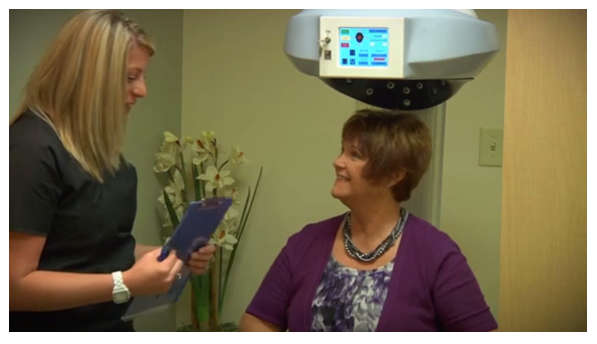
At Transitions™ of Indiana, we offer only the latest technologies to provide our clients hair loss solutions custom-tailored to their individual needs. One of those solutions is low-level laser therapy. This non-surgical hair restoration procedure offers men and women a non-invasive treatment to combat the effects of hair loss. The low-level lasers often referred to as “cold” lasers have no thermal component and do not cut, burn or vaporize. Low-level laser therapy (LLLT) has been approved by the Food and Drug Administration (FDA) for the promotion of hair growth and can be used by men and women of all skin and hair types. But, how effective is laser hair therapy?

The goal of laser hair therapy is to increase circulation of the blood to the base of the hair follicle and to stimulate nerves, muscles and growth. Over time, successive treatments help to strengthen existing hair follicles that have been weakened or damaged and break up the build-up found from the production of dihydrotestosterone (DHT). Laser hair therapy may assist in the recovery of postoperative hair transplants and may increase the speed of new hair growth.

Results from a double-blind randomized experiment conducted by the American Journal of Clinical Dermatology showed that 110 patients with androgenic alopecia exhibited a larger increase in hair density after 26 weeks of therapy with a laser light comb compared to subjects who had been treated with a placebo device. Hair growth in subjects who used laser therapy increased by an average of 19 hairs per square centimeter, versus an average of seven hairs per square centimeter in those using a placebo device. Subjects treated with laser hair therapy experienced healthier conditions such as thicker, shinier and more manageable hair compared to those who used a placebo device.

Laser Hair Therapy is recommended to patients experiencing hair loss for several reasons. First, it’s a viable alternative to those seeking a hair loss solution that is non-surgical. Moreover, Men and Women who may be seeking a hair transplant procedure are not always a candidate for that procedure. For individuals who are “non-candidates” laser hair therapy may be the most viable option for stimulating natural hair growth that doesn’t require surgery. Secondly, it may be highly effective for women. Women may have more difficulty achieving favorable results from a hair transplant procedure. Low-level laser therapy can deliver favorable results before, after or in place of a transplant procedure.

At Transitions™ of Indiana, our team of medical professionals work day in and day out to give our clients the highest quality care and service possible. Here are a few reviews from our clients who chose to share their experiences with Transitions and their laser hair therapy procedures:

Treva Epperly, Laser Hair Therapy client says “Since getting laser and scalp treatments at Transitions, my thin spots have started filling back in. I don’t have to spend time trying to cover the thin spots anymore!”

Mary Schmid, Laser Hair Therapy client, “In just six short months with laser and scalp treatments my hair is fuller, thicker and I am even growing a new hair line on my forehead! My hair stylist even noticed the new growth.”

If you’re ready to get your hair back without the need for a surgical procedure visit our website HERE to learn more about this procedure. Think laser hair therapy isn’t the right solution for you? Transitions™ of Indiana offers several hair loss solutions for clients with all types and degrees of hair loss. Call us at 1-800-GET-HAIR to schedule a FREE complimentary consultation and see which of our hair restoration procedures best fits you.
Transitions is social! LIKE us on Facebook

 “We Restore More Than Just Your Hair!”

Transitions of Indiana is a premiere hair replacement center. Whether you live in Indianapolis, Beech Grove, Speedway, Carmel or anywhere in the surrounding Indiana area, we offer FREE private, confidential consultations to help you determine which customized treatment option is best for your individual situation.  Our hair replacement solution options include Sensigraft, Reallusions, Graduated Enhancement, Laser Hair Therapy, Hair Extensions, and hair loss control products. Take the first step to a new you and schedule your free hair loss evaluation.

Disclaimer: These solutions may not work for you.

Sources:
http://link.springer.com/article/10.1007/s40257-013-0060-6


1. Oysters
A lack of zinc in your diet may lead to hair loss. Oysters have an abundance of zinc. Eating oysters can easily reach the necessary amount of zinc you should have per day in small servings. Other foods that you can eat to fill the zinc quota are nuts and eggs.

2. Spinach
Everyone knows what happens to the cartoon character Popeye when he eats some spinach. He gets big and strong and can take on anything. Well eating spinach may also have positive effects on your hair. Spinach contains the irons and vitamin C your hair follicles need to stay healthy. If you don’t like spinach then broccoli may be a good alternative.

3. Greek yogurt
Greek yogurt is another healthy option that may keep your hair healthy. Greek yogurt contains vitamins B5 and D, these are essential to quality hair follicle health. Other alternatives are cottage cheese and skim milk.

4. Poultry
Hair is nearly all protein so what better food should you eat to help keep your hair nice and strong then chicken which is filled with protein. Poultry contains zinc, iron, and vitamin B. If you currently have a lack of protein in your diet some poultry can fill that void and may even keep your hair healthy. One alternative is lean beef.

5. Sweet Potatoes
Sweet potatoes may be an excellent option for those in need of more vitamin A. A lack of vitamin A may lead to an itchy scalp and possibly dandruff. Some alternatives to sweet potatoes are apricots, mangoes, carrots, and cantaloupe.
“We Restore More Than Just Your Hair!”

Transitions of Indiana is a premiere hair replacement center. Whether you live in Indianapolis, Beech Grove, Speedway, Carmel or anywhere in the surrounding Indiana area, we offer FREE private, confidential consultations to help you determine which customized treatment option is best for your individual situation.  Our hair replacement solution options include Sensigraft, Reallusions, Graduated Enhancement, Laser Hair Therapy, Hair Extensions, and hair loss control products. Take the first step to a new you and schedule your free hair loss evaluation.


Source: WebMD
http://www.webmd.com/beauty/hair-styling/top-10-foods-for-healthy-hair?page=2


Want to look like a star?  These famous celebrities have something that makes their hairstyle unique and stand out from the crowd.


Halle Berry’s short hair pixie cut:
Not many people can pull off the Halle Berry pixie cut, but her iconic look definitely doesn’t disappoint. A lot of women may find the short hair look to be difficult to attempt, but with the right hair style you can make any look your own.

Justin Bieber’s bangs:
This look should never be attempted by anyone over the age of 16. This look should be strictly left to the teens and preteens. There is a reason that Bieber no longer rocks this look and that reason is he outgrew it. While Bieber has changed up his hairstyle nobody will forget the massive bangs hairstyle he had when he first became popular.

Marilyn Monroe’s Curls:
Marilyn Monroe’s signature curls have inspired many others to attempt to copy this famous hairstyle. Recently celebrities such as Madonna, Angelina Jolie, and Christina Aguilera have all tried to make the Marilyn Monroe look their own, but none of them can pull off the look quite like Marilyn Monroe did.

George Clooney’s Caesar hairstyle:
The Caesar is the hairstyle Clooney made all the rage while starring in the television drama “ER.” Clooney was a trendsetter in the hairstyle game as many other celebrities tried to pull off this look. Clooney has since ditched the Caesar look as he has gotten older and has went with a more conventional look that is more proper for his age. He now makes going grey stylish and distinguished with his new hairstyles.

Jennifer Aniston’s “Rachel” haircut:
The “Rachel” is the name for the haircut Jennifer Aniston’s character Rachel on the television show Friends had. This somewhat short, but sleek look grew in popularity amongst women as the show Friends grew in popularity.


Transitions of Indiana is a premiere hair replacement center. Whether you live in Indianapolis, Fishers, Carmel or anywhere in the surrounding Indiana area, we offer FREE private, confidential consultations to help you determine which customized treatment option is best for your individual situation.  Our hair replacement solution options include Sensigraft, Reallusions, Graduated Enhancement, Laser Hair Therapy, Hair Extensions, and hair loss control products. Take the first step to a new you and schedule your free hair loss evaluation.


Everyone has habits! Whether its a good or a bad habit, we're all guilty of having them. But did you know that you could be losing your hair because of your everyday habits. Built up stress or even too many cheeseburgers may play a huge role in your hair loss.

Overwhelming Stress:
Have you recently went through a bad break up, divorce, or a loved one passing away. These built up emotions are causing stressors in life and this can cause you to lose your hair. It is known as Telogen Effluvium, which is also the same factor that can cause hair loss caused by infections, or having a baby. The one thing to determine if your hair loss is due to stress is to think about the past and current events you have faced. Hair loss from stress can occur up to 3 months after the stressful event took place. But there's good news. Once you relive the stress in your life, your hair will most likely grow back!

Too Much Heat:                                                                         
Are you always styling or fixing your hair with heating products like blow-dryers, straighteners, or curling irons? If so you could be damaging your hair. Too much heat applied to your hair may make your hair dry, frizzy, and even fall out. The best way to prevent hair loss, if you must use any styling tools that use excessive heat, is to use a heat protectant spray and to make sure your hair is completely dry before you try to straighten or curl it.  As far as blow-drying your hair, try giving yourself time to let your hair air- dry. This will allow you to use less overall heat on your hair.

Hair Styles:
You wake up some mornings and your running late or just not feeling it, so you pull your hair up into a pony tail. Pony tails are cute, easy, and are perfect for the busy person or athlete. However, they can cause you to lose your hair if you wear your pony tail too tight. A tight pony tail breaks and splits your hair causing damage that can take a while to replace. The best way to wear a ponytail or braids every day is to rotate them between different spots on the scalp. For example, one day do a low pony tail and the next a high pony tail. This will relieve the pressure on the scalp reducing the risk of hair loss. Also. Never use rubber bands to tie your hair back with. Try to use a soft scrunchy or alternative. Rubber bands alone will damage the hair.


Let Transitions of Indiana help give your hair what it needs to grow strong and healthy. We encourage you to take the time and review your options then come in for a no cost, no obligation private hair loss consultation.

“We Restore More Than Just Your Hair!”

Transitions of Indiana is a premiere hair replacement center. Whether you live in Indianapolis, Beech Grove, Speedway, Carmel or anywhere in the surrounding Indiana area, we offer FREE private, confidential consultations to help you determine which customized treatment option is best for your individual situation.  Our hair replacement solution options include Sensigraft, Reallusions, Graduated Enhancement, Laser Hair Therapy, Hair Extensions, and hair loss control products. Take the first step to a new you and schedule your free hair loss evaluation.
It can be frustrating to hear about research that you might benefit from but is still in the “promising” stage. Such is the case with stem cell research related to hair loss. Yet, the glass is half-full because much progress has been and is being made. The apparent resolution to hair loss seems to have been hiding in our scalp all along.

Hair follicles may hibernate, but they do not die. Even after hair loss follicles retain viable stem cells (little fountains of life) that can, with the right kind of nudge, get hair follicles producing again. It’s like a miracle waiting to happen.

Stem Cells

Stem cells are undifferentiated (or pluripotent), meaning they can morph into any of the body’s 200 plus types of cells. Throughout life, they keep their ability to divide and become cellular specialists. If stem cells in dormant hair follicles can be reactivated, it is believed new hair will grow.

Our chameleon stem cells, which contain the template for all cells, start the creation process by producing “progenitor” cells. The progenitor cells can only change into a select few cell types. For those with male or female pattern hair loss, follicle stem cells have stopped producing progenitor (replacement) cells for those worn out or damaged.

Discovery: Follicle Stem Cells Cause Hair Growth

In 2004, researchers at the University of Pennsylvania School of Medicine thought that stem cells inside the bulge of a follicle were the instigators of hair growth. To prove this, they isolated some follicle stem cells and transplanted them into the skin of mice. The procedure produced new hair growth within four weeks.

The researchers looked forward to isolating stem cells taken from the adult human scalp and replanting them in other areas, hoping to produce similar results. They estimated another ten years before people would be able to heal resulting from the use of stem cell transplantation.

Discovery: “Fat” Stem Cells Tell Follicle Stem Cells What To Do

Fast forward to 2011. Though researchers had known stem cells in hair follicles need a signal from the skin to produce hair, where exactly the signal originated was a mystery. Then, in studies at Yale University, researchers located stem cells in the fatty layer of human skin that send out molecular messages prompting hair growth.

Those who have male or female patterned hair loss still have a reserve of live stem cells in their dormant roots, but the roots need a molecular jolt to resume hair growth. The Yale researchers are hoping to get the “fat” stem cells to transmit “grow hair” signals to the stem cells snoozing inside unproductive follicles.

In A Nutshell . . .

1.      Researchers stimulate fatty tissue stem cells
2.      Fatty tissue stem cells transmit the message “grow hair!”
3.      Dormant follicle stem cells receive the message, “grow hair!”
4.      Follicle stem cells wake up
5.      Follicle stem cells get busy creating progenitor cells
6.      Progenitor cells become hair producing cells
7.      Hair resumes growing
 
Let’s hope that soon stem cell therapy will become a routine procedure to alleviate hair loss.

“We Restore More Than Just Your Hair!”

Transitions of Indiana is a premiere hair replacement center. Whether you live in Indianapolis, Beech Grove, Speedway, Carmel or anywhere in the surrounding Indiana area, we offer FREE private, confidential consultations to help you determine which customized treatment option is best for your individual situation.  Our hair replacement solution options include Sensigraft, Reallusions, Graduated Enhancement, Laser Hair Therapy, Hair Extensions, and hair loss control products. Take the first step to a new you and schedule your free hair loss evaluation.


After receiving a cancer diagnosis, the last thing on your mind is your hair and skin. However, hair loss and skin changes are a very real and emotion-filled part of cancer treatment for most women. Women who think ahead and plan for these changes may find themselves less stressed and surprised than those who are not prepared. Follow the tips below to stay ahead of the wave and keep your hair and skin healthy.

Revitalize your skincare routine. The American Cancer Society discusses the possible skin changes that may occur during treatment, which include color changes, redness, itching, peeling, dryness, rashes, and acne. In light of these changes to your skin, your skin care routine should shift accordingly. Chemocare.com suggests staying away from perfumed products, bubble baths, and lanolin-based creams and lotions. These ingredients dry out your skin. Check the ingredients of the products you currently use. If one of your favorite products contains ingredients that may further irritate your skin, don't throw it away! Just place the products aside until your cancer treatment is over. Temporarily replace these products with more gentle scrubs and cleansers. Substances that keep your skin hydrated include petroleum and mineral oil. Use bath oils instead of soap to keep your skin looking fresh and healthy on a daily basis

Choose a hair care expert. Do your research before heading to any old store to purchase a wig. It’s important to find a professional hair loss expert in your area who will take the time to consider the options with you. Jan Ping, Emmy-winning TV cosmetologist, hairstylist and cancer survivor, says, “going to a professional experienced in hair loss and hair replacement is important because they can help you and guide you through all the stages of hair loss. Trusting someone else can be a relief when you’re not feeling well.

Choose a wig early. When it comes to selecting a hairpiece, it’s best to take care of as much as you can pre-treatment. Women who visit a hair loss professional before losing their hair will find it much easier to select a hair loss solution that matches the color and style of their natural hair. Also, making decisions when you’re feeling healthy is much easier than choosing a wig or hair prosthesis during cancer treatment, after you have already begun to lose your hair. Your skin color and tone may look different during treatment, which may call for a hair color adjustment that may be slightly lighter or darker than your natural color. When you meet with a hair loss professional whom you trust, you can speak candidly with that person about exactly how you’d like for your hair to look.

Caring for your skin and hair is caring for yourself. Many women have kept the same skin and hair care routine for years. Even though shifting a pattern is difficult, it is essential to change your routine when your skin and hair undergo changes. If you’re coping with symptoms that are expected during cancer care, remain patient with the process and treat yourself gently.
Let Transitions of Indiana help give your hair what it needs to grow strong and healthy. We encourage you to take the time and review your options then come in for a no cost, no obligation private hair loss consultation.

“We Restore More Than Just Your Hair!”

Transitions of Indiana is a premiere hair replacement center. Whether you live in Indianapolis, Beech Grove, Speedway, Carmel or anywhere in the surrounding Indiana area, we offer FREE private, confidential consultations to help you determine which customized treatment option is best for your individual situation.  Our hair replacement solution options include Sensigraft, Reallusions, Graduated Enhancement, Laser Hair Therapy, Hair Extensions, and hair loss control products. Take the first step to a new you and schedule your free hair loss evaluation.

References
National Cancer Institute. Managing Chemotherapy Side Effects. Skin and Nail Changes. http://www.cancer.gov/cancertopics/chemo-side-effects/skin-and-nail


Sure, winter is here, but with a little extra care, your hair can remain as healthy and great-looking as ever–whether it’s natural growth hair or a custom human hair addition. There are proactive ways to make sure your hair always looks its best. This month, Transitions hair experts dive into the 5 don’ts for keeping your hair healthy this winter.

1. Don’t Forget to Deep Condition Your Hair Regularly
Static electricity isn’t your friend. To keep it under control, deep condition your hair to keep it smooth and moisturized.

2. Don’t Rub Your Hair Dry.
Pat it dry instead. Rubbing your hair dry with a towel can cause damage when your hair is at its most delicate state. The same can be said about rubbing your face with a towel when you get out of the shower. It’s best to pat it dry or let it dry on its own, especially hair additions. Hair additions can require an especially gentle touch to avoid pulling the hair from the base. Keep in mind, your hair is gentle so treat it with ease.

3. Don’t Blow Dry if You Don’t Have To.
An ionic hair dryer is a great investment if blow-drying your hair is a must for your hectic lifestyle. This type dryer will dry your hair faster with less damage, less frizz and more shine as it flattens and tightens the hair cuticle simutaneously. We find these very useful in Indianapolis due to our long winters. Additionally, use leave-in conditioners and Hair Frizz Eliminators to help strengthen hair when using blow dryers.

4. Hot Oil Treatments
Grab a single-use bottle at the beauty supply store, or grab some Extra Virgin Olive Oil from the cupboard. It will help heal your hair from daily wear and tear. Apply directly to damp hair, and put on a plastic cap and/or a hot towel.

5. Don’t Settle for Static.
Avoid clothes that generate static electricity. It helps to brush your hair with wooden combs or brushes to reduce the static. And the more your hair is moisturized, the less you’ll suffer from static!

If you have any questions, contact us at Transitions of Indiana. Let Transitions of Indiana help give your hair what it needs to grow strong and healthy. We encourage you to take the time and review your options then come in for a no cost, no obligation private hair loss consultation.

“We Restore More Than Just Your Hair!”


Transitions of Indiana is a premiere hair replacement center. Whether you live in Indianapolis, Beech Grove, Speedway, Carmel or anywhere in the surrounding Indiana area, we offer FREE private, confidential consultations to help you determine which customized treatment option is best for your individual situation.  Our hair replacement solution options include Sensigraft, Reallusions, Graduated Enhancement, Laser Hair Therapy, Hair Extensions, and hair loss control products. Take the first step to a new you and schedule your free hair loss evaluation.
Whether a woman believes reaching menopause is something to be happy or sad about, many start experiencing hair thinning where hair is wanted, and hair growth where it is not; one of life’s little jokes. Though finding a way to laugh about it helps, it is a problem that negatively affects women’s self-esteem and emotional well-being. Here’s a brief look at alopecia. Although it can begin anytime after puberty, alopecia is a common form of hair loss after 50.

Alopecia areata affects about 5 million people in the United States. We see it very frequently at Transitions of Indiana. This type of hair loss is considered an autoimmune disease, meaning the body’s immune system attacks its very own hair follicles. Other onset factors include a person’s genetic makeup, other illness, pregnancy, and stress.

The first sign of alopecia areata is typically a small, round, and smooth patch of baldness on the scalp. Those with alopecia areata eventually experience complete baldness, or alopecia totalis. Others may lose hair over their entire body, called alopecia universalis. The course of alopecia areata is unpredictable, and hair may grow back only to fall out again. 
Androgenic alopecia refers here to the female version of male pattern baldness. It has been linked to an inherited sensitivity to the male sex hormone, androgen. Women may experience diffuse hair thinning over their entire scalp instead of the actual baldness that develops in men.
Menopause and After
At menopause, your estrogen and progesterone levels drop, and this seems to be responsible, or partly so, for hair thinning (and that cheeky peach fuzz that seems to appear overnight). Other factors related to hair loss are high levels of stress, illness, hormonal imbalances, harsh hair products, and a genetic disposition.

Blood-sugar levels, thyroid tests, and an evaluation for rheumatoid disease may be suggested by your doctor to rule out other possible causes for any hair loss. A test for excessive androgen in your system is appropriate if the loss is sudden. As for managing the unwanted loss or growth, it is recommended you see a doctor to discuss possible lifestyle changes and medication options.

Lifestyle Changes
Suggested life style adjustments are a healthy diet, getting plenty of B vitamins (especially B6), enjoying a cup of green tea every day, losing some pounds, and trying shampoo that contains hyaluronic acid. These changes may help restore hair growth although it will take three to four months before you know. Even if taking these suggestions does not restore your hair, they are good habits for general well-being.

Stress hormones and insulin, if the levels are high, can cause an excess of androgen in the body. Reducing stress may lower the androgen enough to stop intrusive hair from peppering the chin. Walking, meditation, yoga, visualization, shooting some hoops, caring for a pet, swimming, playing with the grandchildren, and gardening are suggestions. 

Medication
Medicinal options for menopause and post-menopause hair loss include a limited-term prescription for estrogen, Rogaine (minoxidil), steroids, or metformin (a drug often used with type 2 diabetes). All of these medications carry possible side-effects and should be discussed with your doctor.

Low Level Laser light treatments may be utilized to control hair loss and to promote healthy hair growth.   Laser therapy treatments can be conducted in an office environment with a hair loss professional. An FDA cleared portable laser can also be purchased for at home use.  Meet with a qualified hair loss professional to learn more about your options. 

Let Transitions of Indiana help give your hair what it needs to grow strong and healthy. We encourage you to take the time and review your options then come in for a no cost, no obligation private hair loss consultation.


Transitions of Indiana is a premiere hair replacement center. Whether you live in Indianapolis, Beech Grove, Speedway, Carmel or anywhere in the surrounding Indiana area, we offer FREE private, confidential consultations to help you determine which customized treatment option is best for your individual situation.  Our hair replacement solution options include Sensigraft, Reallusions, Graduated Enhancement, Laser Hair Therapy, Hair Extensions, and hair loss control products. Take the first step to a new you and schedule your free hair loss evaluation. www.transitionsindy.com
After receiving a cancer diagnosis, the last thing on your mind is your hair and skin. However, hair loss and skin changes are a very real and emotion-filled part of cancer treatment for most women. Women who think ahead and plan for these changes may find themselves less stressed and surprised than those who are not prepared. Follow the tips below to stay ahead of the wave and keep your hair and skin healthy.

1. Revitalize your skincare routine. The American Cancer Society discusses the possible skin changes that may occur during treatment, which include color changes, redness, itching, peeling, dryness, rashes, and acne. In light of these changes to your skin, your skin care routine should shift accordingly. Chemocare.com suggests staying away from perfumed products, bubble baths, and lanolin-based creams and lotions. These ingredients dry out your skin. Check the ingredients of the products you currently use. If one of your favorite products contains ingredients that may further irritate your skin, don't throw it away! Just place the products aside until your cancer treatment is over. Temporarily replace these products with more gentle scrubs and cleansers. Substances that keep your skin hydrated include petroleum and mineral oil. Use bath oils instead of soap to keep your skin looking fresh and healthy on a daily basis

2. Choose a hair care expert. Do your research before heading to any old store to purchase a wig. It’s important to find a professional hair loss expert in your area who will take the time to consider the options with you. Jan Ping, Emmy-winning TV cosmetologist, hairstylist and cancer survivor, says, “going to a professional experienced in hair loss and hair replacement is important because they can help you and guide you through all the stages of hair loss. Trusting someone else can be a relief when you’re not feeling well.

3. Choose a wig early. When it comes to selecting a hairpiece, it’s best to take care of as much as you can pre-treatment. Women who visit a hair loss professional before losing their hair will find it much easier to select a hair loss solution that matches the color and style of their natural hair. Also, making decisions when you’re feeling healthy is much easier than choosing a wig or hair prosthesis during cancer treatment, after you have already begun to lose your hair. Your skin color and tone may look different during treatment, which may call for a hair color adjustment that may be slightly lighter or darker than your natural color. When you meet with a hair loss professional whom you trust, you can speak candidly with that person about exactly how you’d like for your hair to look.
|
Caring for your skin and hair is caring for yourself. Many women have kept the same skin and hair care routine for years. Even though shifting a pattern is difficult, it is essential to change your routine when your skin and hair undergo changes. If you’re coping with symptoms that are expected during cancer care, remain patient with the process and treat yourself gently.

Let Transitions of Indiana help give your hair what it needs to grow strong and healthy. We encourage you to take the time and review your options then come in for a no cost, no obligation private hair loss consultation.

“We Restore More Than Just Your Hair!”

Transitions of Indiana is a premiere hair replacement center. Whether you live in Indianapolis, Beech Grove, Speedway, Carmel or anywhere in the surrounding Indiana area, we offer FREE private, confidential consultations to help you determine which customized treatment option is best for your individual situation.  Our hair replacement solution options include Sensigraft, Reallusions, Graduated Enhancement, Laser Hair Therapy, Hair Extensions, and hair loss control products. Take the first step to a new you and schedule your free hair loss evaluation.

References
National Cancer Institute. Managing Chemotherapy Side Effects. Skin and Nail Changes. http://www.cancer.gov/cancertopics/chemo-side-effects/skin-and-nail


When pregnant, hormonal changes in a woman’s body prevent her hair from shedding as it did before pregnancy. So, her hair thickens and for a few months she enjoys having more luxurious tresses than before.

One to five months after delivering the baby, surprise! Some women experience a large amount of hair shedding, or hair falling out in clumps, as their hormones return to pre-pregnancy status.

While the hair loss may be disappointing or scary, it is a normal response to the body’s readjusting post-pregnancy chemistry. About 40 to 50 percent of pregnant women experience this type of extreme shedding known as Telogen Effluvium or TE, but fortunately it is a temporary condition.

Why some new moms return to their regular pre-pregnancy hair cycle immediately after birth and others do not, is unknown.

Why Hair Loss after Pregnancy occurs

1.      At any given time, other than pregnancy, around 90% of our hair is in a growth, or anagen phase. The other 10% is taking a break from growth and resting in what is called the telogen phase.
1.   Every eight to twelve weeks, the resting hair sheds. We find it in our brushes and shower drains. Once hair is lost, the “empty” hair follicles can begin to produce a new shaft.

2.      During pregnancy the increased estrogen keeps hair growing strong. The hair does not rest and fall out as before, leaving some moms-to-be with hair so thick it might be difficult to comb.

3.      When estrogen levels plummet after birth, up to 60% (usually less) of the mother’s hair can enter the resting phase and be lost through shedding. It may take six to twelve months for the hair cycle to return to its pre-pregnancy routine. Women who breastfeed may keep their extra locks a bit longer.

Any time a woman’s estrogen levels change there is a possibility of hair loss. Besides pregnancy, other triggers are miscarriage, stopping any hormonal form of birth control, or out of balance hormones.

For Healthy Hair During and After Pregnancy

Eat three to four servings of fruit and vegetables every day. Make sure that some of the daily veggies are dark green and leafy.

Talk to your doctor about supplementing your diet with Vitamins C, E, the B complex, biotin, and zinc.

Shampoos containing biotin and silica are recommended, followed by a good conditioner.

Be gentle with your hair. If you blow dry your hair, use the dryer’s cool setting. Use wide tooth combs after shampooing, and do not stress-out your hair with tight rollers, curling irons, pigtails, weaves, or cornrows. Consider putting off chemical treatments such as perms, dyes, or straightening.

Women should inform their doctors of excessive postpartum hair loss since there is a possibility of other underlying causes for it, especially if the shedding does not resolve within a few months. For example, a vitamin deficiency can trigger hair shedding as can changes in the thyroid after giving birth.

Let Transitions of Indiana help give your hair what it needs to grow strong and healthy. We encourage you to take the time and review your options then come in for a no cost, no obligation private hair loss consultation.

“We Restore More Than Just Your Hair!”

Transitions of Indiana is a premiere hair replacement center. Whether you live in Indianapolis, Beech Grove, Speedway, Carmel or anywhere in the surrounding Indiana area, we offer FREE private, confidential consultations to help you determine which customized treatment option is best for your individual situation.  Our hair replacement solution options include Sensigraft, Reallusions, Graduated Enhancement, Laser Hair Therapy, Hair Extensions, and hair loss control products. Take the first step to a new you and schedule your free hair loss evaluation.


This week, Transitions of Indiana will dive into the topic of how smoking directly influences your hair loss.

As many of you know, there are 4,000 poisonous chemicals, carcinogens, and toxic metals in one cigarette. Everyone knows how those chemicals harm our lungs, but smoking is also directly related to hair loss. Even if you have genetic, patterned hair loss, smoking will exacerbate shedding and diminish the effectiveness of treatments, including medications.

Among other poisons, cigarettes contain DDT which is a banned insecticide, formaldehyde (embalming fluid), the rat poison called arsenic, a radioactive gas called radon, and toluene which is an industrial solvent. Just reading that is enough to make a person’s hair follicles quiver.


How Smoking Affects Hair Health

4000 poisonous chemicals
When smokers take a puff, the body automatically attempts to clean the chemicals from its system. Cleaning takes energy away from other body functions such as hair growth.

Carbon monoxide
Hair follicles are among the fastest growing cells in the body. That is why follicles need continuous access to nutrients and oxygen. Because carbon monoxide limits the oxygen and nutrients available in the blood stream, hair follicle cells suffer from malnutrition and inadequate oxygen when an individual smoker inhales it.

Living in high gear
The human body is not designed to live in a constant state of excitement. Nicotine in cigarettes triggers the release of adrenaline, keeping the body revved up. Living in high gear, over time, wears out the entire system, causing the smoker to age faster.

Circulation
Nicotine in the system keeps blood vessels in a contracted state. This restricts blood flow to our fast growing follicle cells, and every other cell in the body.

Hormones
Smoking increases the dihydrotestosterone in hair follicles and, smokers generally have higher levels of testosterone in their system. When elevated amounts of DHT and testosterone get together, the chance of hair loss is increased.

Second hand cigarette smoke contains 250 toxins and 50 of them are carcinogens. If you are around secondhand smoke frequently it is a health hazard and may aggravate hair loss.

Restore Health to Your Hair

Hair loss and early graying are visible effects of smoking, making them good motivators for smoking cessation. If you want to quit, make sure you have support and talk to your doctor about the best way to approach it. Here are four more tips:

1.   You will need to learn other ways to relax. Many people smoke when stressed and need new tools to cool their jets post smoking. Music, meditation, breathing or stretching exercises, soaking in the tub, or taking up a hobby, are options. You must find something that works for you.

2.   It is helpful to rid the house of anything related to cigarettes and smoking. That includes cleaning the carpet, drapes, and furniture to eliminate cigarette odor.

3.   Did you know that eating fruits, veggies, and dairy products affect the taste of cigarettes? Many smokers report smoking tastes terrible after eating those good-for-you foods.
3.
4.   Getting exercise helps relieve nervous energy and makes it easier for the body to clean out toxins. The exercise does not have to be strenuous or boring. Walking, yoga, shooting hoops, bike riding, playing tennis, and dancing are suggestions, but choose something you enjoy.

Let Transitions of Indiana help give your hair what it needs to grow strong and healthy. We encourage you to take the time and review your options then come in for a no cost, no obligation private hair loss consultation.

“We Restore More Than Just Your Hair!”

Transitions of Indiana is a premiere hair replacement center. Whether you live in Indianapolis, Beech Grove, Speedway, Carmel or anywhere in the surrounding Indiana area, we offer FREE private, confidential consultations to help you determine which customized treatment option is best for your individual situation.  Our hair replacement solution options include Sensigraft, Reallusions, Graduated Enhancement, Laser Hair Therapy, Hair Extensions, and hair loss control products. Take the first step to a new you and schedule your free hair loss evaluation.


People are always seeking answers to their receding hair lines. Most spend an absorbent amount of money on products and hair care before they even consult a professional. The shear fact is, everyone wants to pretend they are in control of their hairs destiny and its hard to find the right type of help. It also doesn’t help when there are countless misconceptions out there about hair loss. Its important to separate fact from fiction, therefore this month, Transitions of Indiana in Indianapolis gets to the bottom of myths about hair loss. Here’s the bald truth.

“Hair Loss is Passed Down From Your Mother’s Side of the Family”
For years now, it has been thought that hair loss was inherited from the mother’s side of the family. This myth is FALSE. The primary baldness gene is on the X chromosome, which men only get from their mothers; however there are other factors that come into play. For instance, research shows that men who have bald fathers are more likely to develop male pattern baldness.

“Wearing a Hat for Years has Resulted in My Hair Falling Out”
From helmets to ball caps, rumor has it that hats cause eventual hair loss. This myth is also FALSE. This theory comes from the idea of excess stress and tugging on hair follicles. However, wearing a hat is not considered, “excess” on the follicles like hair braids hair extensions and other hairstyles can be. As long as you keep the hat clean by rotating their use and/or washing them, they should not result in stress or scalp infection. Take care of your hair and make sure that your scalp and hair are always clean. Dirt has the ability to clog follicles. Shampoo 2-3 times per week and condition daily and you shouldn’t encounter any problems.

“Substantial Sun Exposure On My Head Has Resulted In My Hair Loss”
This applies mostly to those individuals living down south. This statement is simply FALSE. Your hair actually acts as a shield against your scalp. Hair loss in both men and women appear at the follicle level and the sun would have to penetrate at this depth in order to truly contribute to any damage.

“Stress Has Resulted in My Hair Loss Over the Years”
This myth is TRUE. Severe amounts of stress has the ability to cause temporary hair loss (alopecia areata) However, the scalp has the ability to recover and hair can grow back as a result.

“Smoking Can Cause Hair Discoloration and Hair Loss”
This myth is TRUE. According to J. G. Mosley of the Leigh Infirmary in Lancashire, England in an article in Science News (January 11, 1997) smokers are four times more likely to have gray hair than non-smokers. Even worse, smoking has been conclusively connected to accelerated hair loss.

Let Transitions of Indiana help give your hair what it needs to grow strong and healthy. We encourage you to take the time and review your options then come in for a no cost, no obligation private hair loss consultation.

“We Restore More Than Just Your Hair!”
www.transitionsindy.com

Transitions of Indiana is a premiere hair replacement center. Whether you live in Indianapolis, Beech Grove, Speedway, Carmel or anywhere in the surrounding Indiana area, we offer FREE private, confidential consultations to help you determine which customized treatment option is best for your individual situation.  Our hair replacement solution options include Sensigraft, Reallusions, Graduated Enhancement, Laser Hair Therapy, Hair Extensions, and hair loss control products. Take the first step to a new you and schedule your free hair loss evaluation.


For most men and women, thinning hair and hair loss can be a catastrophic experience.  Generally speaking, hair loss is more prominent in men, but women may also experience hair loss at extreme levels. Whether you’re a man or a woman, chances are you may experience some level of hair loss, hair thinning, or hair breakage in your lifetime.  For most of us, we can only hope it comes later in our lives, but for some individuals it’s important to take an active approach to combating your hair problems. The good news is nowadays, there are solutions for just about every problem. 

Female hair loss may occur for various reasons including the following:

Female Pattern Hair Loss
With female pattern hair loss, gradual thinning across the top of the head is caused by an abnormal reaction to the male hormone, testosterone. It takes longer for a hair to grow back in after it is shed and thicker, longer hairs are replaced by shorter, thinner hairs.

Stress
Emotional and physical stress may lead to increased cortisol levels which affect hormonal levels and may cause hair loss.

Alopecia
This is an autoimmune disease that makes hair fall out in small patches. In many cases, it may lead to total baldness.

Hormonal Changes
Hormonal imbalance occurs in every woman to some degree as she ages and estrogen levels fall. When estrogen levels fall, the body allows more available testosterone without opposition. When this happens, hair loss may be the victim.

Diet and Nutrition
A common cause of hair loss in women is nutritional deficiency. A diet that is right for your hair should include proteins, iron, sulphur, zinc and Vitamin B and leave out the refined sugars that have a high Glycemic Index.  These foods include processed foods like white bread, French fries, sodas and beer to name a few.

Chemotherapy
Hair loss occurs during chemotherapy because it targets cancer cells as well as healthy cells and structures filled with tiny blood vessels that make hair are some of the fastest growing cells in the human body. As the chemo is battling the cancer cells, it also destroys hair cells.

Hair Products and Styling
Hairstyles such as ponytails, dreadlocks and tight rollers can cause constant pulling on the hair and therefore damage the hair follicles. 

Tinea Capitis
Tinea Capitis is a fungal infection of the scalp and is often referred to as ringworm of the scalp. Fungi can live on dead tissue of hair and skin layers and grow well in warm, moist areas. Your health care provider may prescribe medicine to help combat this scalp infection.

Trichotillomania
This is a mental disorder where an individual pulls out their hair frequently, which may cause bald spots on their scalp.

Menopause
As with most menopause symptoms, an imbalance of the body’s hormonal levels may lead to hair loss. The good news is that if this is the reason, it may not be permanent.

If you feel that any of these symptoms exist, you need to immediately consult a professional. This is the only step to finding the true culprit of your hair loss. Professionals may test hair samples and get to the root of your problem.

Let Transitions of Indiana in Indianapolis help give your hair what it needs to grow strong and healthy. We encourage you to take the time and review your options then come in for a no cost, no obligation private hair loss consultation.

“We Restore More Than Just Your Hair!”

Transitions of Indiana is a premiere hair replacement center. Whether you live in Indianapolis, Beech Grove, Speedway, Carmel or anywhere in the surrounding Indiana area, we offer FREE private, confidential consultations to help you determine which customized treatment option is best for your individual situation.  Our hair replacement solution options include Sensigraft, Reallusions, Graduated Enhancement, Laser Hair Therapy, Hair Extensions, and hair loss control products. Take the first step to a new you and schedule your free hair loss evaluation.


Powered by Blogger.