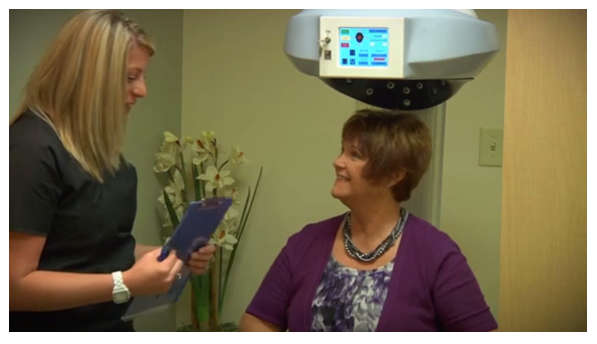
At Transitions™ of Indiana, we offer only the latest technologies to provide our clients hair loss solutions custom-tailored to their individual needs. One of those solutions is low-level laser therapy. This non-surgical hair restoration procedure offers men and women a non-invasive treatment to combat the effects of hair loss. The low-level lasers often referred to as “cold” lasers have no thermal component and do not cut, burn or vaporize. Low-level laser therapy (LLLT) has been approved by the Food and Drug Administration (FDA) for the promotion of hair growth and can be used by men and women of all skin and hair types. But, how effective is laser hair therapy?

The goal of laser hair therapy is to increase circulation of the blood to the base of the hair follicle and to stimulate nerves, muscles and growth. Over time, successive treatments help to strengthen existing hair follicles that have been weakened or damaged and break up the build-up found from the production of dihydrotestosterone (DHT). Laser hair therapy may assist in the recovery of postoperative hair transplants and may increase the speed of new hair growth.

Results from a double-blind randomized experiment conducted by the American Journal of Clinical Dermatology showed that 110 patients with androgenic alopecia exhibited a larger increase in hair density after 26 weeks of therapy with a laser light comb compared to subjects who had been treated with a placebo device. Hair growth in subjects who used laser therapy increased by an average of 19 hairs per square centimeter, versus an average of seven hairs per square centimeter in those using a placebo device. Subjects treated with laser hair therapy experienced healthier conditions such as thicker, shinier and more manageable hair compared to those who used a placebo device.

Laser Hair Therapy is recommended to patients experiencing hair loss for several reasons. First, it’s a viable alternative to those seeking a hair loss solution that is non-surgical. Moreover, Men and Women who may be seeking a hair transplant procedure are not always a candidate for that procedure. For individuals who are “non-candidates” laser hair therapy may be the most viable option for stimulating natural hair growth that doesn’t require surgery. Secondly, it may be highly effective for women. Women may have more difficulty achieving favorable results from a hair transplant procedure. Low-level laser therapy can deliver favorable results before, after or in place of a transplant procedure.

At Transitions™ of Indiana, our team of medical professionals work day in and day out to give our clients the highest quality care and service possible. Here are a few reviews from our clients who chose to share their experiences with Transitions and their laser hair therapy procedures:

Treva Epperly, Laser Hair Therapy client says “Since getting laser and scalp treatments at Transitions, my thin spots have started filling back in. I don’t have to spend time trying to cover the thin spots anymore!”

Mary Schmid, Laser Hair Therapy client, “In just six short months with laser and scalp treatments my hair is fuller, thicker and I am even growing a new hair line on my forehead! My hair stylist even noticed the new growth.”

If you’re ready to get your hair back without the need for a surgical procedure visit our website HERE to learn more about this procedure. Think laser hair therapy isn’t the right solution for you? Transitions™ of Indiana offers several hair loss solutions for clients with all types and degrees of hair loss. Call us at 1-800-GET-HAIR to schedule a FREE complimentary consultation and see which of our hair restoration procedures best fits you.
Transitions is social! LIKE us on Facebook

 “We Restore More Than Just Your Hair!”

Transitions of Indiana is a premiere hair replacement center. Whether you live in Indianapolis, Beech Grove, Speedway, Carmel or anywhere in the surrounding Indiana area, we offer FREE private, confidential consultations to help you determine which customized treatment option is best for your individual situation.  Our hair replacement solution options include Sensigraft, Reallusions, Graduated Enhancement, Laser Hair Therapy, Hair Extensions, and hair loss control products. Take the first step to a new you and schedule your free hair loss evaluation.

Disclaimer: These solutions may not work for you.

Sources:
http://link.springer.com/article/10.1007/s40257-013-0060-6


Most people shed roughly 50 to 100 hairs a day. This is normal and doesn’t cause noticeable thinning because new hair continues to grow in at the same time. Hair loss occurs when this cycle of shedding and regrowth is disrupted. These disruptions are usually related to the effects of heredity, hormonal changes and medical conditions, extreme stress or a change in supplements. It is important to identify these changes in order to properly maintain the health of your hair and scalp. Below are five of the most common reasons women experience hair loss.

Heredity
The most common cause of hair loss is a hereditary condition called androgenetic alopecia or female-pattern baldness. Female-pattern baldness occurs gradually in a predictable pattern of a receding hair line with thinning hair in women. Hair thins typically at the top and crown of the scalp. It usually starts widening through the center hair part. In most cases, hair loss is mild to moderate. To treat female pattern baldness, the Food and Drug Administration (FDA) approved the treatment of minoxidil. For women, a two percent concentration is recommended. Minoxidil may help hair grow in about 1 in 4 women and it slows or stops hair loss in most women.

Hormones
Hormonal changes and imbalances can cause temporary hair loss. These changes could be due to pregnancy, childbirth or early stages of menopause. Estrogen, the predominant hormone in women’s bodies makes you feel energized and helps stabilize your moods when it’s balanced appropriately. However, too much estrogen, which can be caused by excess weight gain, can lead to thinning hair. During and after pregnancy, estrogen levels peak and then fall, causing sudden hair loss for many women. Insulin, in charge of regulating blood sugar levels, also has an effect on several different body processes, including fat storage, heart health and hair growth. A study published in the European Journal of Cardiovascular Risk found that women showing signs of insulin resistance may have a higher risk for female pattern baldness. Too much testosterone in women can create hair growth in some unpleasant areas including the face, neck and chest but it can also contribute to hair loss on the head. Incorporating more fiber into your diet will help lower levels of estrogen levels. Focusing on a high-protein, low carbohydrate diet with lots of vegetables can also improve insulin resistance, if it’s contributing to hair loss.

Stress
Extreme stress can also be a contributor to temporary hair loss. When your body is under stress due to fluctuating thyroid levels, it channels energy needed for processes such as hair growth to more critical processes needed to balance your hormones. Low thyroid is often the cause of a thinning scalp that women see as they age. If you are consistently stressed you may want to request help from your doctor to determine which lifestyle or dietary changes may benefit you most. In the meantime, managing your stress levels with a healthy activity and getting the recommended amount of sleep will help with general hormone balance and can protect your hair from any further damage.

Vitamin A
Excess intake of  Vitamin A can be a factor in hair and scalp health. Vitamin A is essential for many bodily functions including hair growth. This vitamin is in-soluble, meaning your body stores whatever excess you take in. You may consume vitamin A by eating liver, eggs and dairy products. In addition, dark leafy green vegetables and dark orange fruits and vegetables contain beta-carotene which your body can use to produce vitamin A. It is difficult to overdose on vitamin A through a diet alone, but it is easier to do if you take supplements. As a precaution, always discuss Vitamin A supplementation with your doctor, especially if you are on any medication.

Medications
Drugs or treatments used for cancer, depression, heart problems, arthritis, and high blood pressure are among the top medications that can contribute to hair loss. Even certain birth control pills can be a problem, especially if you stop using them abruptly. If you notice sudden changes in your scalp or hair and have recently started taking a new medication, consult your doctor right away. There are usually alternative treatments that can leave you with fewer side effects.

Unfortunately, there are no magic pills or product that will correct hair loss entirely, but there are hair loss solutions available. Whether your hair loss is a symptom of genetics, dietary changes and hormonal imbalances or previous medical procedures such as chemotherapy, Transitions of Indiana has a hair loss solution for you. At Transitions of Indiana we want to get you back to feeling beautiful and help you regain your confidence. Call us now at 1-800-GET-HAIR or visit our website at www.transitions.com/solutions-women/ and schedule a FREE hair and scalp analysis today!

Transitions is social! LIKE us on Facebook

 “We Restore More Than Just Your Hair!”

Transitions of Indiana is a premiere hair replacement center. Whether you live in Indianapolis, Beech Grove, Speedway, Carmel or anywhere in the surrounding Indiana area, we offer FREE private, confidential consultations to help you determine which customized treatment option is best for your individual situation.  Our hair replacement solution options include Sensigraft, Reallusions, Graduated Enhancement, Laser Hair Therapy, Hair Extensions, and hair loss control products. Take the first step to a new you and schedule your free hair loss evaluation.

Disclaimer: These solutions may not work for you.

Sources:


Androgenetic alopecia or male pattern baldness (MPB) as it’s commonly known is a medical condition and the main reason behind hair loss in men. Approximately 25 percent of men who suffer from MPB begin losing their hair before age 21. Hair loss and balding also occur in women. Genetics are a huge factor in an individual’s susceptibility to hair loss. Beyond genetics, something that every individual can monitor and has the ability to change is the amount of sleep they are getting each night.

One of the primary causes of hair loss is sleep deprivation, or lack of sleep. In the modern fast-paced world, sleep is often overlooked or neglected. Experts recommend a minimum of eight hours of sleep a night. Many people find fitting those eight hours in around their busy schedules of work, rest and relaxation. This can have adverse effects on your health, one of which is lead to an increase in stress. Stress is common and a large amount of stress can lead to insomnia. Leading hair experts have established a link between sleep deprivation and hair loss.

Sleep is absolutely essential for our body. Each night, when you sleep, your body recharges itself with electrolytes and replenishes its energy. If this time is cut short, this can negatively impact the body’s immune system. The body starts to get weak. A consistent lack of sleep can prevent the body from absorbing the nutrients necessary to stay healthy. Due to a lack of nutrients, the roots of hair can become weak. Weakened hair follicles allow the hair to fall out easily.

What to Do If You're Having Trouble Sleeping at Night:

Millions of people have trouble getting enough sleep. Take comfort knowing you aren’t alone. There are some easy lifestyle changes that are recommended to those who can’t wind down at the end of a hard day, the first of which is turning the lights down. Try to stay clear from watching TV, using a laptop, tablet or phone or any bright back lit screen before heading off to sleep. This will help your brain relax. Avoid using stimulants such as caffeine commonly found in drinks like tea, coffee or soda. In addition, some people find it difficult to sleep if they’ve eaten a large meal just before heading off to bed. Working long hours late at night can also be problematic in regards to sleeping patterns. This will inhibit your ability to sleep shortly after your mind has been fairly active.

At Transitions of Indiana we understand that hair loss isn’t something we choose but gaining the look we want can be. We offer various hair restoration procedures to help your gain the look you want all the while respecting your personal schedule. We offer low monthly payment plans to make your hair restoration goals affordable and convenient.  Which procedure is the best fit for you? Visit www.TransitionsIndy.com or call 1-800-GET-HAIR for a FREE confidential hair and scalp analysis to determine the cause of your hair loss problem today!

Transitions is social! LIKE us on Facebook

 “We Restore More Than Just Your Hair!”

Transitions of Indiana is a premiere hair replacement center. Whether you live in Indianapolis, Beech Grove, Speedway, Carmel or anywhere in the surrounding Indiana area, we offer FREE private, confidential consultations to help you determine which customized treatment option is best for your individual situation.  Our hair replacement solution options include Sensigraft, Reallusions, Graduated Enhancement, Laser Hair Therapy, Hair Extensions, and hair loss control products. Take the first step to a new you and schedule your free hair loss evaluation.

Disclaimer: These solutions may not work for you.

Sources:
http://www.hishairclinic.com/can-lack-of-sleep-cause-hair-loss/
http://www.belgraviacentre.com/blog/lack-of-sleep-can-cause-hair-loss-082/


At Transitions of Indiana, we are committed to restoring your hair and your confidence. We provide hair loss solutions for those suffering the devastating effects of hair loss, thinning hair and baldness. We understand that an investment in your appearance is an investment in your self-confidence. Our talented team of professional hair restoration experts are dedicated to restoring your hair to its natural volume and healthy look, resulting in a new look to match your new lifestyle or a return to one you’ve loved and missed.

At Transitions of Indiana we have taken great pride in providing our clients cutting-edge breakthroughs in male and female hair loss solutions in both surgical and non-surgical hair restoration and replacement. So many of our clients are so pleased with their results that they are eager to share the story of their hair restoration journey in the hopes that others may start their own journeys. Nancy, a ReAllusions® client shares her story with us.

Nancy sought help from Transitions when she saw pictures of herself from her vacation and she realized she had to do something to help her feel more secure. Nancy tried perming, teasing and every other solution she could but failed to find the results she was looking for. Looking for a solution that would make Nancy feel more feminine, her biggest concern was that her new hair wouldn’t look real. Now, Nancy is delighted to have a full head of hair that is so seamless and natural-looking that no one suspects that it’s not hers.

At Transitions of Indiana, we offer FREE Hair and Scalp Analyses to find the best hair loss solution to fit your individual needs. For Nancy, it was ReAllusions®. ReAllusions® is a procedure exclusively offered at Transitions of Indiana. It is a totally undetectable, proven non-surgical hair replacement treatment. The hair virtually becomes a part of you, helping you attain a perfect and natural result.

Transitions is social! LIKE us on Facebook

 “We Restore More Than Just Your Hair!”

Transitions of Indiana is a premiere hair replacement center. Whether you live in Indianapolis, Beech Grove, Speedway, Carmel or anywhere in the surrounding Indiana area, we offer FREE private, confidential consultations to help you determine which customized treatment option is best for your individual situation.  Our hair replacement solution options include Sensigraft, Reallusions, Graduated Enhancement, Laser Hair Therapy, Hair Extensions, and hair loss control products. Take the first step to a new you and schedule your free hair loss evaluation.

Disclaimer: These solutions may not work for you.


At Transitions of Indiana we know that deciding to do something about your hair loss is a major decision. So if you’ve taken the first step to a new you and scheduled your free hair & scalp analysis here is a glimpse at what you can expect once you step into Transitions.

As soon as you arrive at Transitions you will be welcomed by a member of our staff who will show you to one of our private consultation rooms. The consultation will last about 60 minutes were you will receive an analysis and scalp evaluation with one of our trained hair loss specialists. We want you to feel as comfortable as possible so we encourage you to bring a friend or family member to help you make a decision about our company, our procedures, and the artistic expertise of our staff.
During your consultation our hair specialist will talk with you to learn more about your hair and find out what may be causing your hair loss. Your specialist will than perform a hair analysis to learn the specific needs of your hair and fully answer any questions you may have. Your specialist will also go over which hair restoration solution is appropriate for your particular type of hair loss.

We want your decision to be based on solid information and the excellent reputation of your local Transitions hair replacement studio. At Transitions it’s important to us that you feel comfortable and confident with the hair restoration solution you choose but most importantly we want you to feel good about the appearance of the person you see every day in the mirror. Schedule your FREE hair loss evaluation today and see what Indiana's most trusted name in hair restoration can do for you.

Transitions is social! LIKE us on Facebook

“We Restore More Than Just Your Hair!”

Transitions of Indiana is a premiere hair replacement center. Whether you live in Indianapolis, Beech Grove, Speedway, Carmel or anywhere in the surrounding Indiana area, we offer FREE private, confidential consultations to help you determine which customized treatment option is best for your individual situation.  Our hair replacement solution options include Sensigraft, Reallusions, Graduated Enhancement, Laser Hair Therapy, Hair Extensions, and hair loss control products. Take the first step to a new you and schedule your free hair loss evaluation.

Disclaimer: These solutions may not work for you.

Did you cut off your hair and now you want it back? Not to worry, there are many natural and simple ways to get your hair to grow back faster. Here are 4 tips and tricks that you can do to not only get longer hair but to get healthier hair.

Tip 1: Drink plenty of water.
Drinking plenty of water is essential to our body so it can function properly. It is also essential to our hair. Our hair needs to be hydrated on a regularly basis. Not only can drinking water contribute to the health of your hair, it adds shine and strength to it as well. It is recommend for one to drink 8 glasses of water a day to ensure that your hair and body is getting the hydration it needs.

Tip 2: Trimming is a must.
Getting your hair trimmed may seem pointless when you’re trying to grow your hair out because they take length off, but it isn’t. Getting your hair trimmed means that the stylists will just cut off the split ends and the damaged hair. Normally 1 inch is all that need to be cut. By doing this, your hair will grow even faster. When your hair has split ends, it slows growth, which makes it harder for you to get the length you want. So if you want that long luxurious hair you better get your hair trimmed at least every 6-8 weeks.

Tip 3: Don’t over wash. 
Don’t over wash your hair! Many people wash their hair everyday but if you’re trying to let your hair grow this is the worst thing possible. Washing your hair strips your hair from the natural oils it needs to grow. It’s suggested that washing your hair only two or three times a week is the best route to take. If you have to, use dry shampoo products in-between washes that is fine. By letting your hair produce the natural oils that it needs it will become healthier and shinier looking.

Tip 4: Don’t brush wet hair.
Never ever brush your hair while it is wet. I know many people jump out of the shower brush their hair and leave for the day. This will cause damage to the ends or even pull your hair completely out. This is because your hair is most vulnerable when it is wet. If you have to brush your hair while it’s wet try using a wide-toothed comb or pick. This will help prevent breakage, which will encourage hair to grow. Although, the best thing to do is to wait until your hair is completely dry before brushing to prevent any damage.

Keep in mind, if you’re experiencing hair loss, never self-diagnose yourself. The best thing you can do is come in and see a hair expert and for over 15 years Transitions of Indiana has been Indiana’s most trusted name in hair restoration. At Transitions, we take great pride in providing our clients with the latest breakthroughs in hair restoration technology. Whether you are just beginning to experience some hair loss or are in most advanced stages of natural or medically-related hair loss, we can help with our full spectrum programs of male and female hair loss treatments and solutions. Call 1-800-GET-HAIR today to request your FREE information pack or to schedule your complimentary consultation.

Transitions is social! LIKE us on Facebook

“We Restore More Than Just Your Hair!”

Transitions of Indiana is a premiere hair replacement center. Whether you live in Indianapolis, Beech Grove, Speedway, Carmel or anywhere in the surrounding Indiana area, we offer FREE private, confidential consultations to help you determine which customized treatment option is best for your individual situation.  Our hair replacement solution options include Sensigraft, Reallusions, Graduated Enhancement, Laser Hair Therapy, Hair Extensions, and hair loss control products. Take the first step to a new you and schedule your free hair loss evaluation

Disclaimer: These solutions may not work for you.

http://www.seventeen.com/beauty/hair/advice/a29230/how-to-get-long-hair-fast/


When people hear the words hair loss their first thought is usually the hair on someone’s scalp but hair loss can affect many people in many different ways. There are countless diseases, disorders, and drugs that have caused hair loss over different areas of the body.

Chemotherapy Treatments: Chemotherapy drugs are powerful medications that attack rapidly growing cancer cells. Unfortunately, these drugs will also attack other rapidly growing cells in your body like those in your hair roots. While chemotherapy drugs are most often associated with losing the hair on your scalp, these drugs may cause your eyelash, eyebrow, armpit, and other body hair to fall out as well. Chemotherapy doesn’t always guarantee hair loss and certain drugs are more likely than others to cause hair loss and different doses can cause anything from thinning hair to complete baldness. Fortunately, most of the time hair loss from chemotherapy is temporary and your hair should grow back three to six months after your treatment ends.

Alopecia Areata: Alopecia areata is an autoimmune disease. Normally a person’s immune system protects the body against infection and disease but when someone has an autoimmune disease their body’s immune system attacks some part of their own body. With alopecia areata the immune system attacks a person’s hair follicles, in most cases the hair will fall out in small, round quarter size patches. Some people may lose more hair and in rare cases the disease can cause someone to completely lose the hair on their head, face, and body. Anyone can have alopecia areata and while it’s currently unknown what specifically causes this disease scientists believe genetics may have something to do with it. While there is currently no cure for alopecia areata and there are no drugs approved to treat it doctors may use medicines approved for other diseases to help hair grow back. However, none of these treatments prevent new patches of hair loss or cure the disease.

Thyroid Disorders: Due to the hormones it produces, the thyroid gland influences almost all of the metabolic processes in the body. The most common thyroid problems include both an underactive thyroid gland (hypothyroidism) and an overactive thyroid gland (hyperthyroidism). Proper hair growth depends on the proper functioning of the thyroid gland and abnormal levels of thyroid hormones can cause many side effects including hair loss. Having too much thyroid hormones can cause thinning hair all over the scalp and having too little thyroid hormones can cause hair loss all over the body. Once your thyroid disease is diagnosed it may take some time to get the right dosage but once you find the right prescription to help regulate your thyroid hormone levels the hair loss problem should resolve itself.
   
At Transitions of Indiana we know that hair loss is not something we choose but gaining hair is. There are many procedures available today that can help you gain the look you want. Which process is right for you? Let's find out now and put the problems of hair loss behind you, once and for all. Visit TransitionsIndy.com for a no-obligation microscopic hair & scalp exam to diagnose the cause of your hair loss problem today.

Transitions is social! LIKE us on Facebook

“We Restore More Than Just Your Hair!”

Transitions of Indiana is a premiere hair replacement center. Whether you live in Indianapolis, Beech Grove, Speedway, Carmel or anywhere in the surrounding Indiana area, we offer FREE private, confidential consultations to help you determine which customized treatment option is best for your individual situation.  Our hair replacement solution options include Sensigraft, Reallusions, Graduated Enhancement, Laser Hair Therapy, Hair Extensions, and hair loss control products. Take the first step to a new you and schedule your free hair loss evaluation
Disclaimer: These solutions may not work for you.

http://www.mayoclinic.org/tests-procedures/chemotherapy/in-depth/hair-loss/art-20046920
http://www.niams.nih.gov/health_info/Alopecia_Areata/alopecia_areata_ff.asp
http://www.everydayhealth.com/skin-and-beauty/thyroid-disease-and-hair-loss.aspx

Powered by Blogger.